
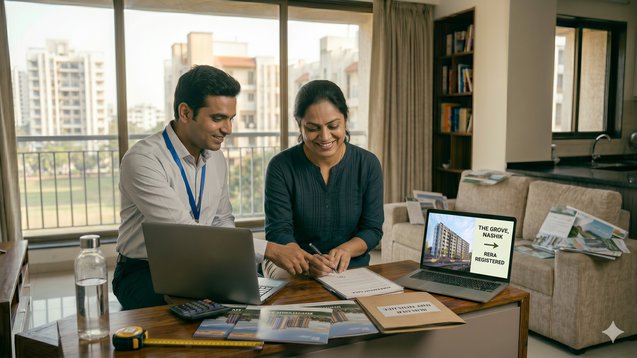
Rushing into a home purchase can feel productive until the wrong choice starts costing you every month. The smarter path is not slower because you are afraid; it is slower because you are paying attention. Learning how to buy property with a clear head means giving yourself enough room to judge the numbers, the location, the timing, and your own habits without being pushed around by panic or excitement. Good property decision making depends on more than liking a kitchen, trusting an agent, or finding a payment that seems manageable on paper. It requires a calmer rhythm. You need facts, but you also need restraint. You need optimism, but not the kind that ignores repairs, commute stress, or weak resale demand. A useful resource hub such as property market visibility can support early research, but the final judgment still belongs to you. Confidence grows when patience has done its work first.
A Calmer Way to Buy Property Without Letting Emotion Take Over
Good decisions start before you tour the first home. The early stage shapes your standards, your limits, and your ability to walk away from a deal that looks better in photos than it lives in reality. Real estate patience is not passive waiting. It is active discipline. You are building the mental frame that keeps one attractive listing from hijacking your judgment.
Why the First Exciting Listing Can Be the Most Dangerous
The first home that feels close to right often gets too much emotional credit. You start imagining furniture, weekend routines, dinner with friends, or children playing in a room that still has peeling paint behind the curtains. That mental movie can be powerful. It can also be expensive.
A smart home buying process slows that movie down. You look at the roof age, street noise, drainage, sunlight, storage, parking, and future maintenance before you let the dream run loose. A home can feel warm during a showing and still be wrong for your daily life. That is not negativity. That is respect for reality.
Many buyers confuse hesitation with weakness. The opposite is closer to the truth. Hesitation gives your brain time to catch up with your feelings. When you pause after a viewing and ask, “What would annoy me here after six months?” you often find the answer hiding in plain sight.
How to Separate Desire From Readiness
Desire sounds like, “I love this place.” Readiness sounds like, “I can carry this place without damaging the rest of my life.” Those are not the same sentence, and they should never be treated as one.
Buyer confidence grows when your budget includes the boring parts: insurance, repairs, moving costs, taxes, service charges, furnishing gaps, and the odd expense that never appears in glossy listings. A buyer who can afford the payment but cannot afford the problems is not ready. That truth stings, but it saves people from years of pressure.
Real estate patience also means accepting that a missed property is not always a missed chance. Sometimes it is protection wearing an ugly jacket. Another listing will appear, another seller will negotiate, another street will make more sense. Scarcity is often a sales tactic before it is a fact.
Building a Decision System Before You Start Negotiating
Once your emotions are under control, the next step is structure. A buyer without a system becomes easy to influence because every opinion sounds equally loud. Your cousin likes the area. The agent says interest is high. The seller wants a fast answer. A system gives you a private compass when everyone else has a reason to rush you.
What a Personal Buying Standard Should Include
A strong standard is not a fantasy wish list. It is a filter. It tells you which compromises are acceptable and which ones will punish you later. Start with the non-negotiables that affect daily life: commute, safety, layout, natural light, school access, parking, noise, and monthly carrying cost.
Property decision making improves when you rank these factors before you see homes. After a viewing, everything feels negotiable because the walls are freshly painted and the agent is smiling. Before a viewing, you can think more clearly. That is when your real priorities should be written down.
One buyer might accept an older kitchen for a shorter commute. Another might accept a longer commute for outdoor space. Neither is wrong. The mistake is pretending you can decide this during a ten-minute tour while someone else is opening cupboards and telling you the home has “great potential.”
Why Patience Needs Deadlines Too
Patience without a decision point can turn into avoidance. You keep browsing, comparing, doubting, and waiting for a perfect home that does not exist. That kind of delay feels safe, but it can quietly drain your energy and leave you unable to act when a strong option appears.
A better home buying process gives patience a shape. Set a review rhythm. After every serious property, score it against your written standard. After every few viewings, adjust only if you have learned something real, not because one seller made you nervous.
Buyer confidence comes from knowing when enough evidence is enough. You do not need to inspect every home in the city to make a sound choice. You need enough comparison to recognize value, enough clarity to know your limits, and enough honesty to admit when a property fits.
Reading the Property Beyond the Listing
A listing is a sales document, not a full truth. It chooses flattering angles, skips awkward smells, avoids weak corners, and rarely tells you how the street feels at 9 p.m. The real home begins where the listing ends. That is where careful buyers find the details other people miss.
How the Neighborhood Tests the Home
A property does not live alone. It borrows value from the street, the traffic, the neighbors, the shops, the schools, the drainage, and the routes people use every day. A beautiful home in a stressful setting can become a daily compromise wearing a nice front door.
Visit the area at different times. Morning traffic tells one story. Late evening tells another. Weekends reveal parking pressure, noise patterns, and how public spaces are treated when nobody is trying to impress you. This is where real estate patience pays for itself. One extra visit can show what the listing never mentioned.
Property decision making should include the future mood of the area, not only its present look. Are homes being maintained? Are vacant plots attracting dumping? Are shops improving or declining? Are roads being repaired or ignored? Small signals collect into a bigger truth.
What Condition Tells You About Ownership History
A home carries the habits of the people who owned it. Fresh paint can hide stains, but it cannot hide poor slope around the foundation, patched plumbing, weak ventilation, or doors that no longer close cleanly. These details do not always mean you should walk away. They mean you should ask better questions.
A calm buyer treats condition as a conversation with the past. If the seller delayed small repairs, they may have delayed larger ones too. If every fix looks temporary, the home may have been maintained only enough to sell. That matters because your first year of ownership often reveals what the viewing concealed.
The counterintuitive move is to appreciate flaws when they are visible. Obvious problems can be priced, inspected, and negotiated. Hidden problems steal choice from you. A perfect-looking home that discourages inspection deserves more suspicion than a worn home with honest defects.
Negotiating From Strength, Not Pressure
Negotiation is not a performance. It is not about sounding tough, winning every term, or squeezing the seller until the deal becomes hostile. Strong negotiation starts with knowing your walk-away point before the conversation begins. The buyer who needs the deal too badly usually pays for that need.
How to Make an Offer Without Losing Control
A good offer has a reason behind it. It reflects comparable sales, property condition, timing, seller motivation, and your own risk. When you can explain the number without sounding emotional, you negotiate from firmer ground.
This is where buyer confidence becomes visible. You are not begging for acceptance, and you are not throwing out a random low number to see what happens. You are presenting a position that makes sense. Sellers may disagree, but a reasoned offer is harder to dismiss than a nervous one.
Real estate patience protects you during counteroffers. A seller may create urgency, hint at other buyers, or frame your delay as a lack of seriousness. Do not absorb that pressure automatically. Serious buyers still sleep on major decisions. The price of one rushed answer can follow you for years.
When Walking Away Is the Best Move
Walking away feels painful because it turns effort into nothing. You spent time searching, viewing, discussing, and imagining. Leaving the deal can feel like losing progress. In truth, walking away is sometimes the moment your standards prove they are real.
A failed negotiation can reveal useful information. Maybe the seller is unrealistic. Maybe the property has more demand than your budget can support. Maybe you discovered that your walk-away point was higher than it should have been. None of that is wasted if you learn from it.
The strongest buyers do not chase every almost-deal. They protect their future self from the version of today that wants relief. That is the hard part. Not always. But often enough.
Conclusion
The best property decisions rarely feel dramatic. They feel steady. You gather the facts, test your feelings, question the numbers, and keep your standards close when pressure rises. That kind of buying does not make you slow; it makes you harder to mislead. A home should improve your life after the excitement fades, after the boxes are unpacked, and after the first repair bill arrives. That is the real test. Anyone can fall in love with a viewing. Fewer people can judge whether the home still makes sense on an ordinary Tuesday six months later. When you buy property with patience, you give yourself a better chance of choosing a place that supports your money, your routines, and your peace. Start by writing your buying standard before your next viewing, then refuse to negotiate against your own future.
Frequently Asked Questions
How can I buy a home without rushing the decision?
Set your budget, write your non-negotiables, compare several homes, and wait at least one night before making an offer. A short pause helps separate excitement from judgment and keeps you from treating urgency as proof of value.
What should I check before making a property offer?
Review the location, condition, legal documents, comparable sales, repair needs, monthly costs, and resale outlook. A strong offer should reflect both the visible appeal of the home and the risks that may affect ownership later.
How does patience help in the home buying process?
Patience gives you time to compare options, notice red flags, and negotiate without panic. It also keeps you from overpaying because of fear, pressure, or attachment to one listing that may not fit your needs.
What creates buyer confidence during a property search?
Buyer confidence comes from preparation, not guesswork. Clear finances, written priorities, proper inspections, area research, and a defined walk-away point help you act with calm judgment instead of relying on emotion.
How do I know if a property is worth waiting for?
A property is worth waiting for when it matches your main needs, fits your budget, has manageable risks, and still feels right after repeated review. Waiting makes sense when the delay protects the quality of the decision.
What are common mistakes first-time property buyers make?
Common mistakes include underestimating ownership costs, ignoring location issues, skipping inspections, trusting listing photos too much, and making offers from fear. Most costly errors happen when buyers move faster than their research.
How should I compare two similar homes?
Compare daily living quality first, then long-term value. Look at commute, layout, repair needs, noise, area growth, monthly cost, and resale appeal. The better home is not always prettier; it is the one that fits life with fewer hidden trade-offs.
When should I walk away from a property deal?
Walk away when the price exceeds your limit, inspection issues are serious, documents raise concern, or the seller pressures you to ignore risks. Losing a deal is easier to recover from than owning a home that strains your life.