
Buying near Silicon Valley has become a test of math, patience, and nerve. For many buyers, Hayward California sits in that middle space where the Bay Area still feels within reach, even when San Jose keeps pulling away. The draw is not mystery. You get East Bay access, BART service, older single-family homes, townhomes, condos, and a price gap that can change the whole loan conversation. That is why Bay Area market coverage keeps mattering for local Americans trying to read the housing map before it moves again. San Jose may still be the dream for many tech workers, but San Jose housing costs can turn that dream into a monthly payment that leaves no room to live. Hayward gives Bay Area home buyers a different trade: less prestige, more breathing room, and a location that does not cut them off from the region’s job engine.
Why Hayward California Feels Reachable Without Feeling Like a Retreat
Hayward works because it is not selling fantasy. It is selling a hard, practical bargain: stay in the Bay Area, give up some shine, and protect more of your budget. That matters when San Jose’s typical home value has hovered well above $1.4 million in recent 2026 market data, while Hayward’s median sale figures have landed far lower by comparison. The gap is not small. It can decide whether a buyer shops seriously or keeps renting for another year.
The price gap changes the buyer’s entire search
A buyer leaving San Jose does not always want to leave the Bay Area. They may work in Santa Clara, have family in Fremont, meet friends in Oakland, and still need airport access. Hayward sits in the center of that triangle better than many outsiders expect.
That central location matters because Bay Area home buyers rarely make decisions from price alone. A cheaper house loses appeal fast if it adds two hours of daily stress. Hayward is not commute-free, but it gives buyers multiple directions to work with. You can look south toward Fremont and San Jose, north toward Oakland, west toward the Peninsula through bridges and corridors, or stay local if your job allows hybrid work.
The non-obvious part is that the lower price does not always mean lower competition. Redfin’s May 2026 data showed Hayward homes selling in a brisk market, with a median price near the high $800,000s and short time on market. Buyers priced out of San Jose are not alone. They are part of a wider group looking for the same “still Bay Area” deal.
A smaller mortgage can protect daily life
The monthly payment is where the choice gets personal. A home that costs several hundred thousand dollars less can mean the difference between stretching and snapping. It can affect childcare, emergency savings, repairs, and whether you can handle a job change without panic.
This is where San Jose housing costs create pressure that the sale price alone does not show. A couple may technically qualify for a larger loan, but qualification is not comfort. Banks approve numbers. Families live with them.
Hayward gives some buyers a way to buy without turning every future decision into a budget meeting. That does not make it cheap. Nothing in the inner Bay Area is cheap by national standards, and California’s own housing affordability data shows state home prices remain far above the U.S. norm. Still, the best comparison is not Hayward versus Texas or Ohio. It is Hayward versus the nearby market a buyer already tried and could not make work.
Location Is the Quiet Strength Behind Hayward’s Demand
Price gets people to look. Location keeps them interested. Hayward sits in Alameda County, close enough to feel connected to the Bay Area’s main job centers, but far enough from San Jose’s highest-priced neighborhoods to reset the budget. That balance explains why East Bay real estate keeps drawing buyers who once assumed their only choices were overpaying or leaving the region.
BART access gives the city more than a commuter label
Hayward has more than one transit story. Downtown Hayward BART and South Hayward BART shape how buyers read the city, especially those who do not want full car dependence. BART and city planning documents have also pointed to mixed-use, mixed-income development around station areas, which signals that local leaders see transit land as part of the housing answer.
That matters for a buyer comparing Hayward with farther-out cities. A lower price in a remote suburb can look good online, then feel costly after months of driving. Transit access does not solve every commute, but it gives you optionality. In the Bay Area, optionality has value.
One concrete example is the downtown station area. BART and the city have discussed potential transit-oriented development near Hayward Station, including residential and ground-floor commercial uses. A buyer does not need to become a planning expert to understand the signal: land near transit is being treated as future housing and neighborhood infrastructure, not leftover pavement.
The city sits between job centers, not outside them
Hayward’s geography is plain but powerful. It is south of Oakland, north of Fremont, east of the Peninsula, and not far from San Jose compared with many cheaper alternatives. For a hybrid worker who goes to the office two or three days a week, that location can be enough.
This is why East Bay neighborhood comparison research should not stop at list price. You need to map the real week. Where is work? Where is daycare? Where are parents, clients, school pickups, airports, and weekend routines? A house that saves money but breaks the week is not a bargain.
The counterintuitive insight is that Hayward may work better for buyers with scattered lives than for buyers with one fixed commute. If every workday ends in North San Jose at rush hour, the drive can wear you down. But if your life pulls you across Oakland, Fremont, San Mateo, and San Jose, Hayward’s middle position can feel less like compromise and more like control.
The Housing Stock Gives Buyers More Ways to Compromise
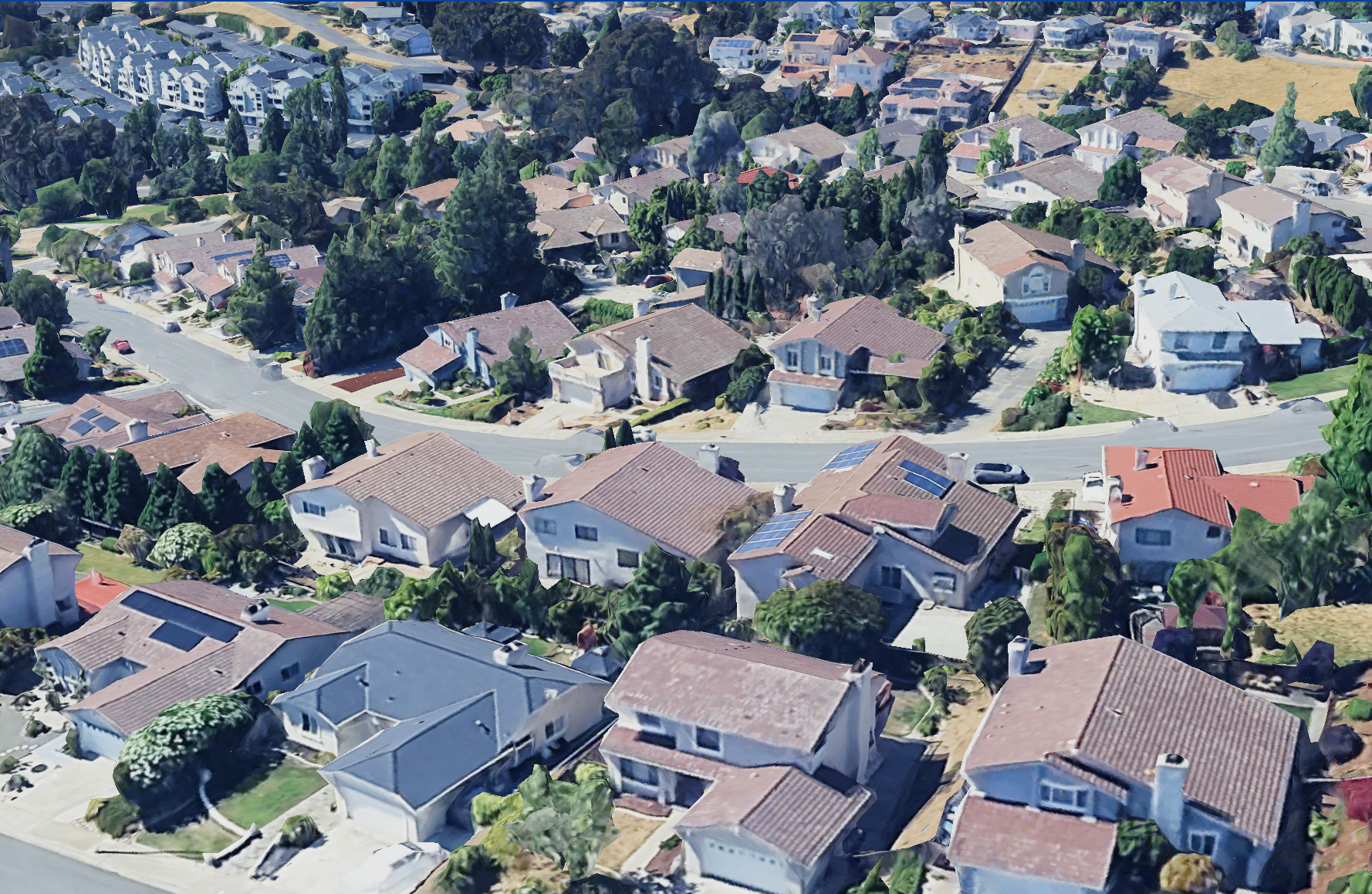
San Jose often forces buyers into one painful question: pay more than planned, accept less space, or move farther away. Hayward widens the menu. You can find older homes, hillside properties, modest ranch houses, condos, townhomes, and pockets that feel different from one another. That variety gives buyers room to choose what they will sacrifice.
Older homes can be a strength when the numbers work
Many Hayward homes are not polished showpieces. Some need roofs, windows, drainage work, electrical updates, or plain old patience. That can scare buyers who are already nervous about Bay Area prices. Fair.
But older housing stock can also create opportunity. A dated kitchen is not the same as a failing foundation. Cosmetic fatigue can become a buyer’s opening if the home is livable, well located, and priced below the shinier listings nearby.
Here is the real-world test: a three-bedroom home near a practical commute route may beat a prettier condo with high monthly dues. The payment is not only the mortgage. It is taxes, insurance, HOA fees, repairs, bridge tolls, gas, and the cost of time. East Bay real estate rewards buyers who look at the full ownership picture, not the listing photos.
Neighborhood-by-neighborhood research matters more here
Hayward is not one flat market. Downtown, South Hayward, the hills, Fairway Park, Harder-Tennyson, Glen Eden, and areas near Union City can feel different in price, commute, home style, and street rhythm. Buyers who treat the city as one number will miss both risk and value.
That is why walking blocks matters. Drive the commute at the hour you will use it. Visit at night. Check noise near major roads. Look at parking. Ask how old the sewer lateral is. Read disclosures slowly. A lower purchase price loses its charm if the first year brings surprise repairs you never priced in.
The non-obvious point is that the best Hayward buy is not always the cheapest home. Sometimes it is the house with fewer hidden costs, better transit access, stronger natural light, and a layout that will still work in seven years. In a tight market, boring can be beautiful.
What Buyers Should Watch Before Choosing Hayward Over San Jose
Hayward is a strong option, not a magic escape. The same forces that strain San Jose affect the whole Bay Area: interest rates, insurance costs, limited supply, high incomes, and fierce demand for well-located homes. A smart buyer should like Hayward with clear eyes, not because they got exhausted elsewhere.
Transit plans and station-area growth can cut both ways
Station-area development can bring housing, shops, safer sidewalks, and a stronger sense of place. It can also bring construction noise, parking fights, and price pressure. Buyers near Downtown Hayward BART or South Hayward BART should follow planning updates before making an offer.
The City of Hayward Housing Plan points to BART-owned sites as housing opportunities, including lower-income, moderate-income, and above-moderate-income units during the planning period. That is useful context. It tells you where public attention is going.
But plans are not keys in the door. Projects can stall, shift, or face funding gaps. A buyer should not pay today’s premium for tomorrow’s promise unless the current home already works. Hope is not a financing strategy.
The San Jose comparison should include income, not only price
San Jose has high housing costs, but it also has high incomes. Census data places San Jose’s recent median household income above Hayward’s. That gap shapes demand. Many San Jose buyers earn more, and some bring stock-based compensation, family help, or years of equity from prior homes.
That means a buyer moving their search north should not assume Hayward will feel easy. Strong listings can still receive fast offers. Clean homes near transit or with flexible layouts may pull in buyers from Oakland, Fremont, San Mateo, and San Jose at once.
This is where San Jose housing cost guide research helps. Compare the payment, commute, local services, school needs, and resale path. Then write down your ceiling before touring homes. The worst time to discover your limit is after a crowded open house makes you emotional.
Conclusion
The smartest Bay Area buyers are not chasing the cheapest pin on the map. They are trying to buy a life that still works after the closing papers are signed. Hayward gives them a serious place to run the numbers again, especially when San Jose has priced them out of comfort. It offers access, variety, transit bones, and a payment gap that can matter for years. That is why Hayward California deserves a close look from buyers who want Bay Area roots without carrying a San Jose-sized mortgage. Still, the decision needs discipline. Study the neighborhood, inspect the house, test the commute, and keep repair money in reserve. A reachable price is only the start. The better win is a home that lets you stay in the region without turning your future into one long payment plan. Choose the house that gives you room to breathe.
Frequently Asked Questions
Is Hayward a good place to buy if San Jose is too expensive?
Yes, for buyers who want Bay Area access at a lower purchase price than San Jose. The trade-off is neighborhood variation, possible commute friction, and older housing stock. It works best when you compare total monthly costs, not only the listing price.
How far is Hayward from San Jose for commuters?
The drive can vary widely based on traffic, route, and work location. Many buyers test the commute before making an offer because rush-hour timing changes the whole decision. Hybrid workers often find the distance easier than daily commuters.
Are Hayward homes cheaper than San Jose homes?
In current market comparisons, Hayward sale prices are far lower than San Jose’s typical values. That does not mean Hayward is low-cost by U.S. standards. It means the city may offer a more reachable entry point inside the Bay Area.
What types of homes can buyers find in Hayward?
Buyers can find condos, townhomes, older single-family houses, hillside homes, and modest ranch-style properties. The mix gives buyers more ways to adjust price, space, location, and repair tolerance than in some tighter Silicon Valley neighborhoods.
Is Hayward better for first-time buyers or move-up buyers?
It can work for both. First-time buyers may like the lower entry point compared with San Jose. Move-up buyers may value more space or a better layout. The key is checking repairs, commute patterns, and long-term neighborhood fit.
Does BART access make Hayward more attractive?
BART access helps buyers who want transit options, especially near Downtown Hayward and South Hayward. It can support long-term demand, but buyers should still study station-area plans, parking, noise, and walking conditions before paying extra for location.
What should buyers inspect carefully in older Hayward homes?
Roof age, foundation condition, drainage, electrical systems, plumbing, sewer lines, windows, and pest history deserve close review. Older homes can be smart buys, but only when repair risk is priced into the offer and cash reserves are realistic.
Is Hayward a strong long-term Bay Area real estate choice?
It can be, especially for buyers focused on access, relative value, and staying near major job centers. Long-term strength depends on the exact home, block, transit access, upkeep, and whether the buyer avoids overpaying during a competitive offer situation.